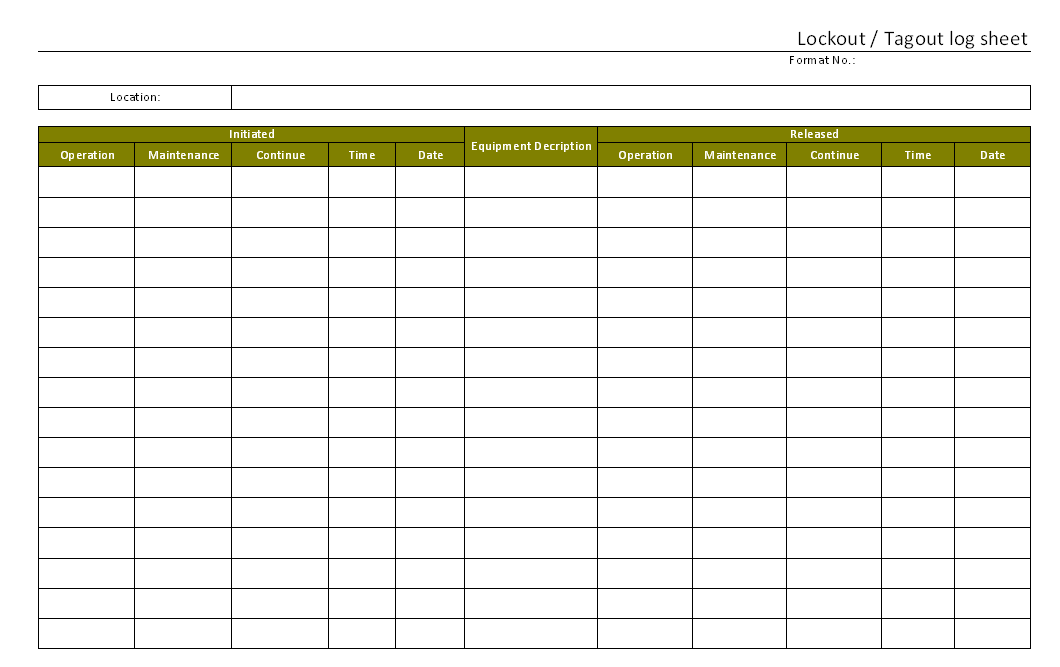
Machines don’t remember. Workers get distracted. Procedures get skipped. That’s why a lock out tag out log isn’t just paperwork—it’s the only permanent record proving a machine was safely isolated before maintenance. Without it, organizations risk catastrophic injury, regulatory fines, and legal liability.
Yet, in too many facilities, LOTO logs are an afterthought—scribbled on sticky notes, lost in binders, or not used at all. This gap between policy and practice transforms a critical safety tool into a hollow formality. The real value of a lock out tag out log lies not in creation, but in consistency, clarity, and enforcement.
This article breaks down what effective LOTO logs look like, how they prevent incidents, and why digital transformation is redefining their role in modern safety systems.
Why Lock Out Tag Out Logs Matter More Than You Think
A lock out tag out log is more than a compliance checkbox. It’s a timeline of control. Each entry documents who isolated a machine, when, why, and how—creating a defensible audit trail.
Consider this scenario: A maintenance technician begins repairs on a conveyor system. Another worker, unaware of the maintenance, re-energizes the line from a remote panel. Without a log, there’s no proof the lockout was initiated or communicated. The result? A crushing injury.
With a properly maintained LOTO log, investigators can trace every action: - Who applied the lock - What energy sources were controlled - When the lock was removed
This isn’t just about blame. It’s about learning. Logs reveal patterns—repeated delays, frequent isolations on specific equipment, or recurring procedural gaps.
OSHA 1910.147(c)(4) requires employers to inspect energy control procedures at least annually. A log is the primary evidence during these audits. Without one, compliance is unverifiable.
What Should a LOTO Log Include?
A useful log balances simplicity with completeness. Overcomplicated forms get ignored. Under-detailed ones offer no protection. The ideal log contains:
- Employee name and ID
- Machine or equipment ID (use asset numbers, not vague descriptions)
- Date and time of lock application
- Type of energy controlled (electrical, hydraulic, pneumatic, etc.)
- Lock and tag numbers used
- Nature of service or maintenance
- Time and name at removal
- Supervisor verification (if required)
Real-World Example: Pump Maintenance in a Chemical Plant
A technician logs the shutdown of a high-pressure chemical transfer pump:

| Field | Entry |
|---|---|
| Employee | J. Rivera (ID: 8821) |
| Equipment | Pump #P-304B, Line 3 |
| Energy Sources | Electrical (480V), Hydraulic pressure |
| Lock Numbers | LK-8891, LK-8892 |
| Tag Number | TG-7743 |
| Lock Applied | 09:15 AM, May 14 |
| Work Performed | Seal replacement, coupling alignment |
| Lock Removed | 11:03 AM, May 14 |
| Verified By | S. Patel (Supervisor) |
This entry is specific, time-stamped, and traceable. If a near-miss occurs later, safety officers can trace whether the isolation was complete.
Common Mistakes That Undermine LOTO Logs
Even well-designed logs fail when used incorrectly. These are the most frequent pitfalls:
1. Backdating or Filling Logs in Advance Technicians “pre-fill” logs to save time. This defeats the purpose—locks and tags must be applied before work begins. Backdating hides timing gaps and removes accountability.
2. Vague Equipment Descriptions Writing “conveyor” instead of “Conveyor C-12, Packaging Line B” creates confusion. Multiple conveyors may be down. Without specificity, overlap risk increases.
3. Missing Removal Timestamps A lock applied but never logged as removed creates false assumptions. Is the machine safe? Is someone still working on it? Ambiguity invites risk.
4. Shared or Generic Logbooks One logbook for all shifts or departments leads to disorganization. Each shift or job should have dedicated, sequential entries.
5. No Verification Step Supervisors must review and sign logs—especially for complex or high-risk work. Skipping this removes a critical layer of oversight.
Paper vs. Digital LOTO Logs: What Works Best? Many facilities still rely on paper logs. They’re low-cost and familiar. But they come with major limitations:
- Hard to search: Finding an entry from three weeks ago takes time.
- Prone to damage: Spills, heat, or rips can destroy records.
- Delayed visibility: Safety managers can’t monitor activity in real time.
- No alerts: No warning if a lock remains applied past a deadline.
Digital logs solve these issues. They allow instant access, automated reminders, and integration with maintenance management systems.
When Paper Still Makes Sense Small operations with limited equipment might find digital overkill. If you have three machines and two technicians, a well-managed binder can work—if it’s reviewed daily and stored securely.
But for larger or high-risk environments, digital is rapidly becoming the standard.
Top 5 Digital LOTO Log Systems
As safety teams modernize, these platforms are leading the shift from paper to digital compliance:
- LockOut/TagOut Pro by Brady
- - Cloud-based log tracking with mobile app
- - Barcode scanning for locks and equipment
- - Automated OSHA-compliant reporting
- - Best for: Mid to large manufacturers
- iAuditor by SafetyCulture
- - Customizable LOTO checklists
- - Photo and timestamp verification
- - Real-time team collaboration
- - Best for: Multi-site operations

- Sphera’s Operational Risk Management (ORM)
- - Integrates LOTO with broader EHS workflows
- - AI-driven incident prediction
- - Audit trail analytics
- - Best for: Large industrial and chemical firms
- Fiix by Rockwell Automation
- - CMMS with embedded LOTO module
- - Syncs with work orders and maintenance schedules
- - Tracks lock usage and technician history
- - Best for: Facilities using predictive maintenance
- EHS Insight
- - Drag-and-drop log form builder
- - Automated reminders for lock removal
- - OSHA 1910.147 templates pre-loaded
- - Best for: Safety managers needing quick deployment
Each of these tools turns the LOTO log from a static record into an active safety control.
How to Audit Your LOTO Log System
An annual compliance check isn’t enough. Regular audits catch issues before they cause harm. Use this checklist quarterly:
- ✅ Are all entries completed before work begins?
- ✅ Are lock and tag numbers unique and traceable?
- ✅ Are removal times consistently recorded?
- ✅ Are supervisors verifying high-risk isolations?
- ✅ Are logs stored securely for at least one year?
- ✅ Are digital logs backed up and accessible?
During audits, cross-check log entries with maintenance records and lock inventories. Discrepancies reveal training gaps or procedural weaknesses.
The Human Factor: Training and Accountability
Technology won’t fix poor habits. Workers must understand why logs matter.
Effective training includes: - Mock lockout scenarios with log completion - Review of real incident reports where logs were missing - Role-playing communication during multi-person lockouts
Accountability starts with leadership. Supervisors should review logs daily, not just before audits. A quick 5-minute huddle to confirm all locks were removed prevents overnight oversights.
Integrating LOTO Logs into Broader Safety Culture
LOTO logs shouldn’t live in isolation. They’re part of a larger energy control ecosystem.
Link logs to: - Permit-to-work systems - Maintenance scheduling tools - Incident reporting databases
When a near-miss occurs, pull the related log. Was the procedure followed? Was communication clear? Use the data to refine training and protocols.
Facilities that treat logs as living documents—not compliance artifacts—see measurable drops in lost-time incidents.
Final Thoughts: Make Your LOTO Log Work for You
A lock out tag out log is only as strong as the system behind it. A well-designed form, consistently used and regularly audited, becomes more than a record—it becomes a prevention tool.
Start by auditing your current process. Is it paper or digital? Is it complete? Is it reviewed? Then, close the gaps. Train rigorously. Enforce discipline. And choose a system that fits your scale and risk level.
The next time a machine is isolated, make sure the log tells the full story—because when something goes wrong, that story could save a life.
Frequently Asked Questions
What is the OSHA requirement for LOTO logs? OSHA 1910.147(c)(4) requires employers to conduct annual inspections of energy control procedures. While a written log isn’t explicitly mandated, it is the primary way to document and verify compliance during inspections.
Can digital logs replace paper LOTO records? Yes. OSHA accepts electronic records as long as they are secure, accurate, accessible, and protected from tampering or loss.
Who is responsible for filling out the LOTO log? The authorized employee performing the servicing or maintenance must complete the log, including lock application and removal times.
How long should LOTO logs be kept? Logs should be retained for at least one year to support annual inspections and incident investigations.
Do all employees need to sign the log? Only authorized employees who apply locks must sign. In group lockout scenarios, each participant logs their lock. The primary authorized employee often maintains the master log.
Can a LOTO log reduce insurance premiums? Yes. Insurers view documented safety practices as risk mitigation. Facilities with detailed, audited logs may qualify for lower premiums.
What happens if a LOTO log is missing or incomplete? A missing or incomplete log can result in OSHA citations, invalidated incident investigations, and increased liability during worker injury claims.
FAQ
What should you look for in Lock Out Tag Out Logs: The Hidden Key to Safer Workplaces? Focus on relevance, practical value, and how well the solution matches real user intent.
Is Lock Out Tag Out Logs: The Hidden Key to Safer Workplaces suitable for beginners? That depends on the workflow, but a clear step-by-step approach usually makes it easier to start.
How do you compare options around Lock Out Tag Out Logs: The Hidden Key to Safer Workplaces? Compare features, trust signals, limitations, pricing, and ease of implementation.
What mistakes should you avoid? Avoid generic choices, weak validation, and decisions based only on marketing claims.
What is the next best step? Shortlist the most relevant options, validate them quickly, and refine from real-world results.